
During a recent trip to Sri Lanka, I noticed two local roadside banana stalls in the neighborhood where I was staying that had intriguing differences in their selling practices and banana display methods. This prompted me to investigate product handling methods, consumer behavior, and supply chain issues around bananas more deeply to understand what makes an efficient and profitable banana supply chain.
In this report, I will analyze the dynamics of banana supply and demand in the Sri Lankan fruit market. I will discuss product grading, post-harvest losses, market uncertainty, supply stability, and make recommendations for the future of Sri Lanka’s banana industry. Comparisons will be made between bananas and staple crops like rice. Finally, I will suggest ways to develop fruit supply chains between Sri Lanka and China.
Observations of Banana Selling Practices
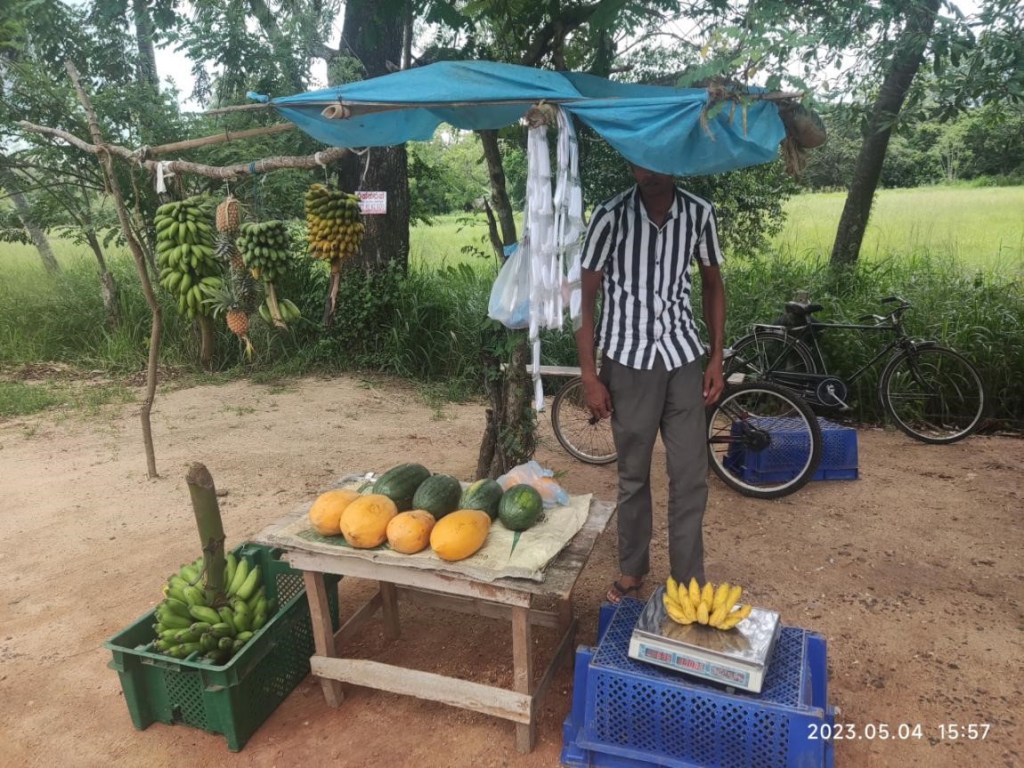
I regularly buy bananas from two stalls located near my home. One stall sells high quality, good tasting bananas at a higher price point. This stall displays the bananas in the form of hands that have been uniformly ripened. The other stall sells lower quality, less flavorful bananas at a lower price point. This stall leaves some bananas connected in bunches and hangs them up, with some separate hands laid out for overripe bananas.

The high end stall seems to harvest bananas at the optimal time for maximum flavor. They carefully control ripening of the bananas as hands in wooden boxes. The attractive display of consistent, ripe banana hands allows them to charge a premium price. Meanwhile, the lower end stall leaves some bananas in bunches longer to extend shelf life by maintaining water in the stems. The seller will cut off hands from bunches to sell to customers. While leaving bananas in bunches slows ripening, it means the younger harvested bananas often lose freshness and flavor. The lower and uneven quality leads this stall to sell at a lower price point.
To further analyze the practices of these two stalls, it would be useful to examine: (1) Pricing, (2) Daily sales volume, (3) Purchasing costs, (4) Ripening methods, (5) Reasons for selling bananas in bunches versus hands, and (6) Other differentiating factors.
Why Product Grading Increases Value
There are several reasons why standard grading of agricultural products can increase their value:
- Selling ungraded, mixed quality products means the average sales price reflects average quality. But customers can cherry-pick the best products at an average price, leaving sellers with lower quality products that do not sell at the average price.
- Standardized grading simplifies purchase decisions for customers by reducing the amount of quality information they must evaluate.
- Uniform products within each grade have a better visual appearance versus mixed sizes and quality.
- Product grading helps shape consumer preferences and purchase habits around certain grades.
- Different grades allow market segmentation to appeal to diverse customers. Mixed products may not appeal to any one customer demographic.
- Ungraded products require more time and attention from customers to personally inspect and judge quality.
Challenges of Small Markets for Perishable Goods
An important characteristic of the fruit market in Sri Lanka is the relatively small size of overall market demand. The limited demand leads to a low total volume of transactions. To cover their business costs despite few sales, sellers must charge higher prices. But the high prices further suppress consumer demand and transactions. When unsold perishable fruits lose their freshness and appeal over time, it becomes even harder to sell them. Significant spoiled product gets discarded, which further raises seller costs. This creates a vicious cycle of “high price – low transactions – high losses – even higher prices.”
The low profits due to unpredictable market demand get passed back upstream to farmers and middlemen in the form of lower purchase prices. Given the market uncertainty, farmers shy away from larger-scale commercial production. Instead they follow a subsistence model, growing fruits primarily for their own consumption and only selling any small surplus. With many small suppliers, collection and transportation costs are higher to aggregate and bring the fruit to market, again raising prices.
When external demand emerges, Sri Lanka cannot supply enough fruits in sufficient quantity and consistent quality. Yet in seasons of higher production, prices crash down due to the limited domestic market. Along with the vicious cycle, the market swings like a pendulum between undersupply and oversupply. Even though locally grown fruits may be quite nutritious, their variability and lack of consistency make it hard to compete against imported fruits that are bred for uniformity, appearance and taste.
If this analysis is accurate, the post-harvest losses stem not just from technical factors but more fundamentally from uncertainty in market demand. Sri Lanka’s open access markets also have many sellers chasing relatively few customers. More market players increases overall unpredictability.
Supply Stability versus Demand Uncertainty
In contrast to more suppliers leading to more stable aggregate supply, having more retailers can increase uncertainty and unpredictability on the demand side. With many small retailers, it becomes difficult for each one to accurately forecast overall market demand. Less retail competitors make demand forecasting much easier for an individual firm.
The more suppliers there are in a market, the more stable the total supply becomes. This is similar to how having more insurers reduces risk in the insurance market. With many heterogeneous suppliers, fluctuations in individual supply even out at the aggregate market level. Farmers and sellers prefer to randomly source from the open market because this evens out variability. However, this only works well when product quality is easy to verify.
With credence goods like food where safety attributes are costly for customers to assess, a stable supply chain with fixed partners is often better. A leader like a supermarket can punish suppliers who act opportunistically by terminating the relationship. This threat of losing future business deters cheating. But the tradeoff is higher purchasing costs for the leader, who must also bear more supply chain risk. Only dominant firms with pricing power and predictable demand can effectively manage integrated supply chains.
Future Directions for Sri Lanka’s Fruit Industry
Some recommendations for the future development of Sri Lanka’s fruit industry:
- Move toward greater production specialization and economies of scale to improve productivity and technology adoption.
- Cluster production geographically to reduce collection costs and improve services like input provision and knowledge sharing.
- Develop more stable market channels, which will facilitate geographic clustering and production specialization.
- Beyond the traditional Middle Eastern export market, new supply chains for processed fruits and fresh exports could be built leveraging ties with China.
Comparing Bananas and Rice in Sri Lanka
Rice is the biggest staple crop in Sri Lanka, providing the main food source. But economically, rice generates relatively little income compared to bananas. Much rice land is underutilized. Currently, rules limit converting rice land to banana cultivation. However, banana generates more income and as a perennial crop, bananas absorb solar energy over a longer duration than seasonal rice. Per land area, banana may produce more calories for consumption and sequester more carbon dioxide. Analyzing the economics, nutrition and environment of banana versus rice production in Sri Lanka merits deeper investigation.
Building Stable Fruit Supply Chains Between Sri Lanka and China
To facilitate fruit trade between the two countries, joint meetings could be organized between Chinese importers and Sri Lankan exporters with governmental support. One idea is “fruits for solar panels” – Sri Lanka lacks foreign currency, so its fruits lack competitive advantage in China. But Sri Lanka’s agriculture needs solar energy. Subsidizing Sri Lankan fruit exports to China through exchanging for Chinese solar panels could benefit both sides with complementary goods.
Some ways to build stronger fruit supply chains between the countries:
- Map existing supply chains in both countries across local markets, supermarkets, and exports. Compare to understand gaps.
- Identify key post-harvest loss points across each supply chain.
- Relate production practices to supply chain requirements – where can improvements synchronize?
- Suggest targeted fruit development strategies for Sri Lanka based on export and domestic demand.
- Clarify stakeholder roles for cooperation between governments, companies, and research institutes.
- Develop supportive policies and innovations for finance, e-commerce, customs, branding, and industry growth.
The goal would be linking Sri Lankan and Chinese fruit value chains by first investigating the current systems and then building synergies through stakeholder alignment.
Conclusion
In this report, I analyzed the dynamics of the banana market in Sri Lanka, including product handling practices, post-harvest losses, and supply chain challenges. I suggested ways to develop a more efficient, profitable, and stable banana industry in Sri Lanka, with potential export opportunities to China. Addressing the small market size and uncertainty in Sri Lanka will involve better coordination between stakeholders in production, collection, and sales. I hope this analysis provides some insights into improving the banana value chain to reduce food losses and raise farmer incomes.




 CBEC for Development
Leave a comment