E-commerce has emerged as a disruptive economic force globally, but many individuals and organizations lack the hands-on knowledge required to thrive in this industry. Recognizing this gap, we initiated a series of workshops and training programs focused on delivering practical learning experiences in e-commerce operations. This post chronicles our journey of conducting collaborations with universities and platforms worldwide to equip participants with skills to manage online stores across major e-commerce sites including Taobao, eBay, Amazon, Shopee and more.
Workshop 1: Exploring the Basics of E-commerce: A Hands-on Workshop on Taobao Operations
Our inaugural workshop, titled “A Hands-on Workshop on Taobao Operations” took place at Huazhong Agriculture University in February 2019. The goal of this workshop was to deliver a practical learning experience in e-commerce to students, leveraging real-life examples and field expertise.

Workshop Overview
Led by Professor Zhou of Huazhong Agriculture University, the workshop saw participation from over 100 Taobao sellers who shared their first-hand experiences and insights with the students. Throughout the three-day event, a diverse cohort of international and Chinese students were introduced to the fundamentals of e-commerce and the modus operandi of online stores. The syllabus included activities like registering a Taobao account, identifying suppliers, and understanding backend operations.
A standout feature of the workshop was the practical experience students acquired by creating their own Taobao accounts. In a noteworthy achievement, one student established an English Taobao store, simplifying the online shopping process for non-Chinese speakers in China. This comprehensive workshop provided students with a thorough understanding of e-commerce, its dynamics, and operations.
Our first workshop was a resounding success, offering students valuable insights and hands-on experience in the e-commerce sector. Participants gained a firm grasp on e-commerce fundamentals and learned how to establish an online store, further enriched by interactions with real-world examples and industry experts. This workshop served as a beneficial learning experience for all participants.

Workshop 2: Navigating Cross-border E-commerce on eBay
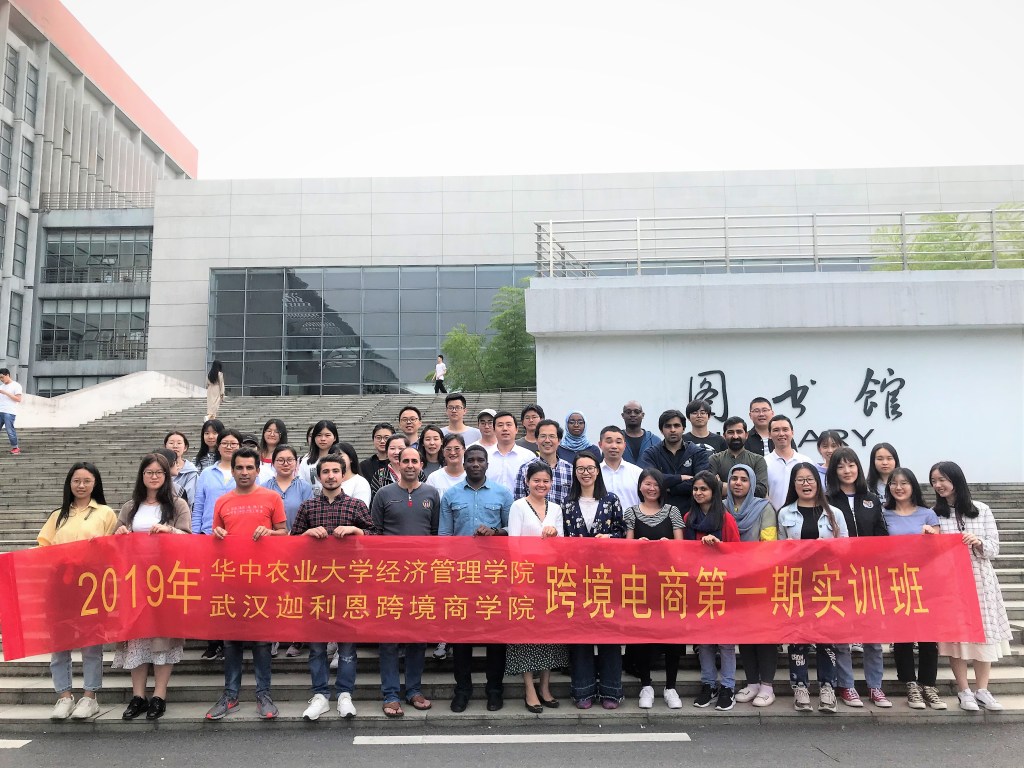
The second workshop, “Cross-border E-commerce on eBay,” took place in April as a joint effort between Huazhong Agriculture University and other educational institutions. The focus of this workshop was to equip students with the practical skills required to manage an eBay store, spanning from product selection to customer service.
Workshop Overview
The workshop was facilitated by Galleon CBEC Company and saw attendees from Huazhong Agriculture University and other universities. Over the course of two days, students received extensive training on operating an eBay store, including aspects like product selection, listing creation, order management, and customer service.
A highlight of the workshop was the practical exposure students gained from working on live eBay stores. This hands-on experience was so impactful that some groups even received orders during the training. Post-workshop, several groups continued their association with the company on a profit-sharing basis, gaining real-world work experience.
This workshop was a remarkable success, providing students with valuable practical experience in the realm of cross-border e-commerce. Participants learned the intricacies of managing an eBay store, from product selection to customer service. With its emphasis on practical, hands-on learning, the workshop equipped students with valuable real-world experience and insights. This workshop was a beneficial learning experience for all participants.

Training 3: Amazon Operation Training and Remote Work Collaboration
Our third training venture focused on the practical operations of Amazon and remote work opportunities for Chinese firms. Conducted in partnership with Taoshi CBEC, a Chinese entity operating on Amazon, the training aimed to equip students with hands-on experience in managing Amazon accounts, offering a viable solution for Chinese firms striving to maintain their competitiveness amidst escalating labor costs.
Training Overview
The training was split into two phases. The initial phase was a two-month, practice-oriented internship during which approximately 40 students from Pakistan received online training. They were granted access to actual Amazon accounts and were taught the fundamental operations of Amazon, including an introduction to the Amazon Seller Center, exploration of Amazon business models, product hunting, listings, keyword selection, optimization, order management, and customer service.
Throughout the first phase, the students were also introduced to the concept of cross-border e-commerce and the challenges faced by Chinese firms. The training rendered a profound understanding of the e-commerce ecosystem and the complexities of operating an online business, and students were urged to apply their theoretical knowledge in practical scenarios.
Performance Evaluation
Throughout the two-month training period, the trainees’ performance was closely monitored. The 14 highest-performing trainees were chosen for the second phase of the training, which involved remote work for Taoshi CBEC, where they were tasked with product selection and listing optimization.

In this phase, the selected trainees were assigned a specific task to optimize product listings on Amazon for Chinese companies. They were given access to the company’s Amazon account and were trained in the specific requirements for the company’s listings. The trainees were closely supervised and provided with performance feedback.
Significance of the Model
The model of employing Pakistani students for remote work with Chinese firms holds considerable implications, especially considering China’s rising labor costs. This training aimed to evaluate the feasibility of this model and deliver a mutually beneficial solution for both parties. The training offered students real-world experience while providing Chinese firms a strategy to uphold their global market competitiveness.
The “Amazon Operation Training and Remote Work for Chinese Company” training proved to be a success, offering students practical experience in operating Amazon accounts and providing a feasible solution for Chinese companies to maintain their competitiveness. The training underscored the viability of employing Pakistani students for remote work and emerged as a valuable learning experience for all participants. The training also underscores the potential for further collaborations between Chinese firms and students from Pakistan.
Training 4: Aliexpress Simulation and Shopee Training
In March 2020, we conducted a training program in collaboration with Cross CBEC Technology Company, a firm operating on the Shopee platform, and Aliexpress Simulation Platform. Our prior training on Amazon had encountered issues, where trainees provided with real accounts were not familiar with e-commerce platform operations and rules, leading to account suspensions due to their oversight. To circumvent such issues, we opted to first train them on a simulated platform, where they could learn the basics of e-commerce platform operations and rules before being provided with actual accounts.
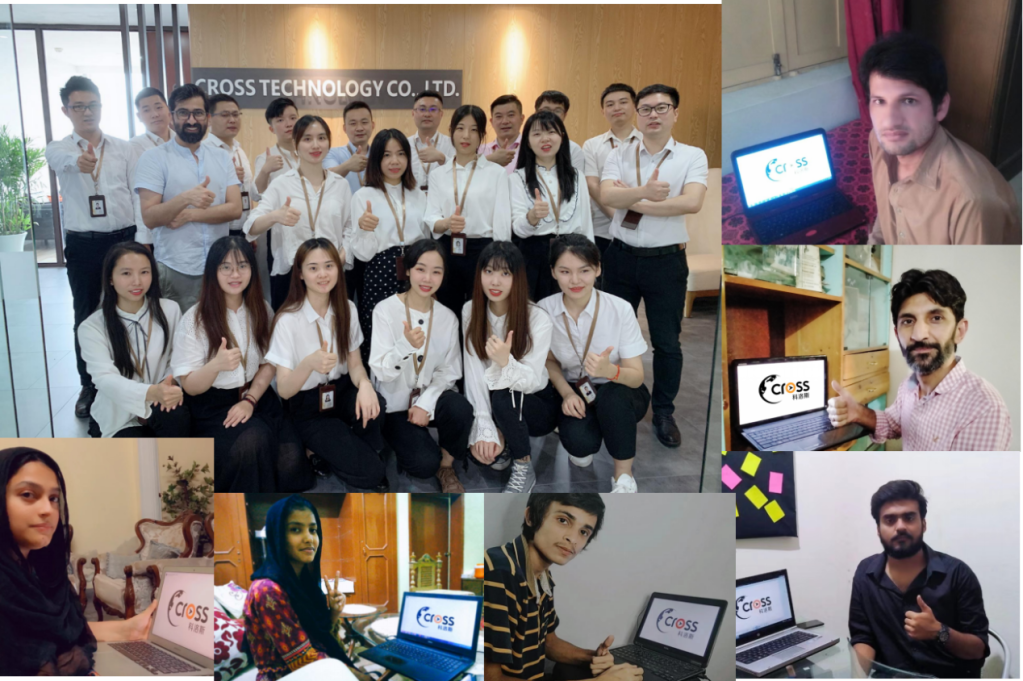
The training attracted participants from various countries, including Pakistan, Bangladesh, and Kenya. Each trainee was given access to an individual Aliexpress Simulation Platform account, where they learned how to operate an online account. This included product selection, creating listings, keyword optimization, order processing, customer services, inventory management, store decoration, banner creation, and more. The simulated training allowed trainees greater freedom to experiment with strategies to attract more orders to their stores.
Upon completion of the simulation training, eight exceptional trainees were selected for the next phase of the program, which involved four months of remote work for the operations department of Cross CBEC Technology Company. These trainees were tasked with the full operation of the company’s Shopee store, which included listing and order processing, store decoration, customer services, and return management.
The training program was a resounding success, with trainees effectively operating the store, gaining practical experience of remote work for a company, and earning income. Simultaneously, the company benefitted from improved basic operations conducted at a reduced cost, creating a win-win situation for both parties.
Our objective is to establish a model for Chinese companies to remotely employ talented youth from Belt and Road countries. These individuals, who have a solid foundation in English and are in need of work, can be utilized by Chinese companies to expand their cross-border businesses while providing opportunities for youth in these countries to gain practical experience and earn income.
Gilgit Project 2022
The Gilgit Taobao Project, launched in March 2022, represents a collaborative effort between a Hangzhou-based Chinese e-commerce company and Di-Hub, a Pakistani e-commerce enterprise. The project’s primary objective is to equip Di-Hub employees with the skills required to operate on Taobao, China’s largest domestic e-commerce platform.

The initial phase of the project tasked Di-Hub with order processing and inventory procurement for five Taobao stores. The project’s subsequent phase entails Di-Hub assuming full operational responsibility for the English Taobao stores provided by the Chinese company. However, linguistic barriers pose a significant challenge, necessitating Chinese language training for Di-Hub employees to surmount this hurdle.
Project Overview
The Gilgit Taobao Project is a collaborative initiative between a Hangzhou-based Chinese e-commerce company and Di-Hub, a Pakistani e-commerce enterprise. The project’s goal is to train Di-Hub employees in operating Taobao, the most extensive domestic e-commerce platform in China. The Chinese company provided Di-Hub employees with fundamental training, encompassing operation of Taobao accounts, creation of listings, management of orders, and inventory procurement.
In the project’s initial phase, Di-Hub was charged with order processing and inventory procurement for five Taobao stores. A team of five Di-Hub employees was tasked with managing the operations of these stores. This phase spanned several months, during which Di-Hub employees familiarized themselves with the Taobao interface and grappled with language and communication barriers in their interactions with Chinese store owners.
The project’s second phase will see Di-Hub assuming full operational control over the English Taobao stores provided by the Chinese company. However, the language barrier continues to present a significant challenge, and Di-Hub employees will need Chinese language training to overcome this obstacle. If successful, the project could expand to additional areas, and more Chinese companies could be invited to participate.
The Gilgit Taobao Project offers a valuable opportunity for Pakistani e-commerce companies to learn from their Chinese counterparts and expand their cross-border businesses. Despite facing several challenges, particularly language barriers, the right training and support can enable Di-Hub employees to overcome these obstacles and assume full operational control over English Taobao stores. If successful, this project could serve as a blueprint for collaborations between e-commerce companies from Belt and Road countries, facilitating cross-border trade and creating employment opportunities for young people.



 CBEC for Development
Leave a comment