
Step into a Taobao village in rural China today and you’ll hardly recognize it from a decade ago. Storefronts boasting the latest fashions line the main street. Locals browse smartphones and chat about customer orders from faraway cities. Prosperity emanates from ecommerce portals like Alibaba’s Taobao marketplace, transforming rural ways of life. This article takes you inside a Taobao village to reveal how ecommerce has radically reshaped China’s rural economy and given rise to a new breed of digital entrepreneurs.
What is a Taobao village?
The concept of a “Taobao Village” took root in 2009, referring to clusters of rural online entrepreneurs who set up shops on the Taobao Marketplace. As per AliResearch, a village qualifies as a Taobao Village if it exhibits the following features:
- Residents spontaneously ventured into e-commerce, primarily leveraging the Taobao Marketplace.
- The total annual e-commerce transaction volume amounts to at least RMB10 million (approximately $1.5 million).
- At least 10% of village households are actively involved in e-commerce, or the village hosts at least 100 active online shops.
The Expanding Footprint and Evolution of Taobao Villages in China
The scale and development of rural e-commerce in China has grown rapidly in recent years, as seen in the growth of “Taobao Villages”. According to the China Taobao Village Research Report 2020, the number of Taobao Villages in China reached 5,425 in 2020, up over 1,100 from the previous year. There are also 1,756 “Taobao Towns”. Taobao Villages and Towns are now spread across 28 provinces and 27 provinces respectively.
The transaction volume of Taobao Villages and Towns exceeded 1 trillion RMB in 2020. There were nearly 3 million active online stores in Taobao Villages and Towns, creating over 8 million jobs. This shows how e-commerce is providing new entrepreneurship and employment opportunities in rural areas.
The development of Taobao Villages is notable in less developed central, western and northeastern regions. In 2020, the number of Taobao Villages in these regions nearly doubled from the previous year to 341. The number of Taobao Towns grew 76% to 393. Over 100 Taobao Villages and Towns emerged in national-level impoverished counties, playing an important role in poverty alleviation.
E-commerce has catalyzed the growth of industry clusters in rural areas, with labor-intensive industries transforming through integration with technology. There are also new trends emerging, such as e-commerce hubs relocating to towns, the rise of livestreaming e-commerce, and digitally-enabled services thriving in Taobao Villages.
A Journey through Xiaying Village: A Hub of Rural E-Commerce
Setting the Scene in Xiaying
In December 2018, we visited Xiaying, a quaint village nestled within the mountainous region 100 kilometers northwest of Shiyan City in Hubei Province, hosts a population of 1,441 across 300 households. Remarkably, around half of these households engage in e-commerce, involving approximately 600 individuals. This bustling online activity led to an impressive online transaction volume exceeding 100 million yuan in 2017.
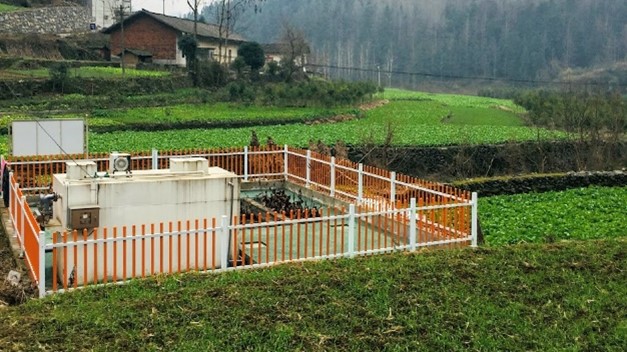
The village boasts essential amenities including kindergartens, pharmacies, clean drinking water, robust road and network infrastructure, and even a sewage treatment plant supporting organic farming. A cozy local restaurant offers a taste of the local cuisine. Public toilets are conveniently situated throughout the village. The village governance comprises a committee, with its leader serving a five-year term. Enhanced 4G and fiber optic internet connectivity ensure smooth online operations. Aided by government support, an e-commerce training center worth 1.5 million yuan is currently under construction.
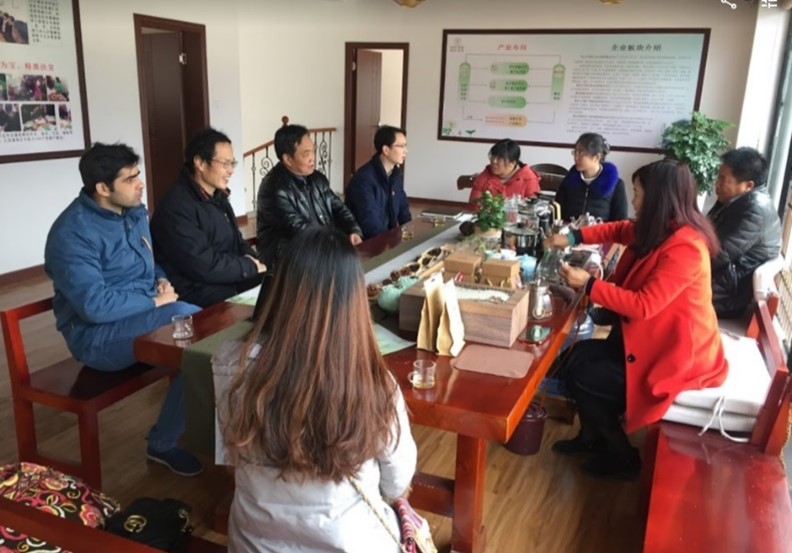
Upon entering Xiaying, we were warmly greeted by Mr. Liu Shuanxi, the village committee leader, and Mr. Jiang Kaming, a renowned young e-commerce entrepreneur. Their introduction to the village, set against a traditional Chinese tea ceremony, was both insightful and welcoming. The office space, equipped with Wi-Fi and a security camera surveillance system, bustled with activity. Our hosts radiated enthusiasm and openness towards potential future collaborations, a sentiment echoed by other village residents.
“Diligence + Honesty + Communication + E-commerce = Success”
– Mr. Liu Shuanxi’s mantra for Xiaying’s success



Exploring Xiaying’s Economic Pillars
Xiaying’s economy thrives on the triad of e-commerce, tourism, and agriculture. I’ll delve into the distinct features of each of these pillars:
E-commerce: The Birthplace of Innovation
About four years ago, Xiaying’s e-commerce journey began when two young locals, Jiang Kaming and Tuo Tao, ventured into selling turquoise on the Taobao marketplace. This move sparked an aggregation of e-commerce practitioners. Turquoise, a gemstone with a thousand-year presence in the village, had long been a part of traditional sales. However, e-commerce introduced a transformative shift in the village’s economic landscape.
The village features an e-commerce industry demonstration area, akin to shopping streets, lined with family-run stores. These stores serve as selling points, workshops, and e-commerce centers. Showrooms displaying turquoise jewelry occupy the ground floor, while the upper floors house machinery for processing and cutting raw turquoise. The raw stone is procured directly from miners.

While Mr. Jiang’s father is involved in the processing and sales of turquoise within the village, Mr. Jiang himself has launched a shop in Shiyan City. He has further innovated by creating a system to offer customers traceability of the turquoise stone. To achieve this, he plans to employ cutting-edge blockchain technology, where each stage of turquoise production can be documented, allowing customers to trace the stones back to their origin. Mr. Jiang is of the belief that this will significantly enhance his brand’s reputation and sales.
We also visited another turquoise vendor, Mr. Tuo Tao, a seasoned player and one of the village’s e-commerce trailblazers. To date, he has been interviewed and showcased by national television stations (CCTV) and a plethora of local and national print media, thus earning him a celebrity status. A former outstanding soldier, who was named “Excellent Soldier” four times, he returned to his village after five years of service and built his business from the ground up. From product selection to photography, from design to customer service, he runs all aspects of his store. Despite initial challenges, his sales have surged from a few thousand yuan per month to 200,000 yuan in a span of four years.

“I reached out to Taobao in 2014. One day, my classmates mentioned that our local turquoise was doing well on Taobao. That conversation changed my life and my circumstances. That same year, our village was honored with the title of “China Taobao Village” by the Ali Research Institute, becoming the first Taobao Village in Hubei Province. In the four years since, I’ve learned everything from product selection, photography, shelving, to customer service. The turnover grew from a few thousand yuan per month to the current 150,000-200,000 yuan.”
– Mr Tuo Tao, a budding e-commerce entrepreneur in Xiayingcun
During our visit to the e-commerce industry demonstration area, we noticed numerous cars parked outside the stores. Mr. Liu informed us that these individuals had amassed wealth through e-commerce and acquired their own vehicles. We observed two young sisters who had purchased a car through their online entrepreneurship, a testament to the transformative power of e-commerce.
Another popular product sold by villagers through e-commerce is red tea. The tea is locally produced and branded. They have successfully launched several brands with distinctive traits. For instance, “Sleeping Beauty” tea, unlike traditional tea, promotes sleep. We were privileged to sample some of these tea brands, the flavors of which were delightful. This tea is sold both online and offline, but the bulk of the income is generated from online sales.
During our visit to the local tea shop, we were joined by two officials from the township party committee, Mr. Chen Shi and Mr. Bao Yu. Mr. Liu had extended the invitation, and they were more than happy to accompany us on the tour of the village. These individuals were incredibly hospitable and enthusiastic. Their presence also denotes efficient collaboration between the village and town administration.
Tourism: Embracing Nature and Tradition
Xiayingcun boasts pristine natural landscapes that take your breath away. A river meanders through the village, elevating its inherent charm. The village annually organizes a summer music festival by the enchanting lotus moonlight pond, attracting enthusiasts from afar. Our visit fell in winter, void of lotuses in the pond, yet the scene retained its captivating allure.
Adjacent to the modernized Xiaying lies an area steeped in antiquity, home to approximately 52 households. Stepping into this neighborhood was akin to time-traveling into the past. Mud houses and vintage public toilets populate the area. The community seemed devoid of young people, likely engaged in work. This unique locality is preserved as a tourist magnet. Thus, the village thrives on a harmonious ecosystem of turquoise selling and tourism. High-quality tourist services entice visitors, who are also offered turquoise for purchase. Given the chance, I would relish the opportunity to revisit this place.


Agriculture: Honoring Roots
Despite the affluence brought by e-commerce, the village remains tethered to its agricultural roots. Given its mountainous terrain, they’ve carved terraced farmland into the mountainsides. Every available patch of soil is put to use for agricultural production, growing vegetables and corn primarily for household consumption. As previously mentioned, they also cultivate red tea, which is sold online. Free-range chicken farming is another agricultural venture they undertake.
The farmers exhibit commendable innovation, employing their resources to maximum effect. I observed stacks of firewood neatly arranged, and corn cobs perched on handcrafted wooden shelves for sun drying.
Conclusions
From our visit, we can distill the following key insights:
- Governmental support plays a pivotal role in establishing the fundamental infrastructure necessary to catalyze rural e-commerce in a village.
- Villages like Xiaying, dubbed as ‘Taobao villages’, serve as breeding grounds for businesses. This environment enables many to learn from their neighbors and establish their own startups.
- Despite educational limitations, rural residents can swiftly acquire and innovate skills to compete in the online marketplace.
- Rural e-commerce spawns both direct and indirect job opportunities.
- Once the revenue stream starts to flow, e-commerce exerts an agglomerative effect. The success of a few individuals paves the way for others, as the Taobao market offers an avenue for low-cost innovation and information gathering.
- Over time, villagers have adopted ingenious protective measures such as implementing blockchain technology.
- Rural e-commerce opens doors for villagers to amplify the sales of local specialty products.
- The advent of rural e-commerce has a positive economic ripple effect.




 CBEC for Development
Leave a comment