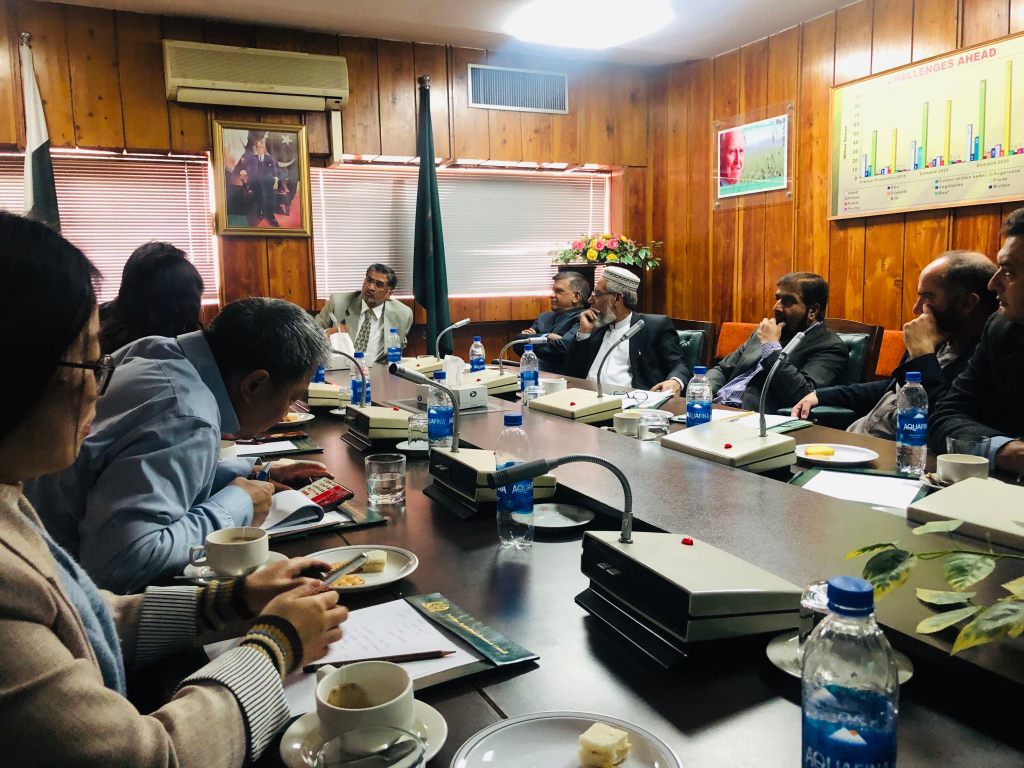
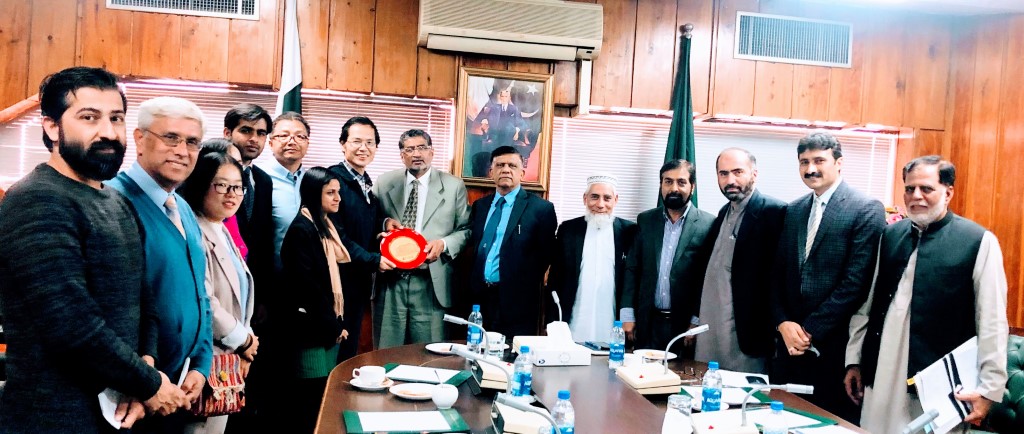
In 2019, during the 2nd International Cross-Border E-Commerce (CBEC) Forum in Pakistan, we presented a project proposal at the Pakistan Agricultural Research Council (PARC). This blog entry explores the details of that proposal, which focused on assessing the trade potential between Pakistan and China through the establishment of a free trade zone for CBEC.1
CBEC is rapidly evolving as an innovative platform for online sales worldwide. As of now, e-commerce contributes to 12% of global exports, with a projection of this figure increasing to 30% by 2023. Notwithstanding, CBEC has its unique set of challenges, which encompass logistics, data management, custom duties, and tax payments. To counter these issues, free trade zones have come to the forefront as viable solutions. China, an early adopter, has already set up 35 such zones, catering to the requirements of online businesses with quick delivery, strategic locations for logistics, and economies of scale.
Our proposal drew motivation from the transformative changes instigated by globalization and technological evolution. These changes have served to bridge the gap in demand and supply across nations. China, one of the world’s most rapidly expanding economies, has nearly maximized its potential in the manufacturing sector. However, its agricultural imports have experienced a significant rise, from $15.8 billion in 2002 to $113.8 billion in 2016, and this increase is expected to continue.
Conversely, Pakistan’s agricultural sector employs 60% of the population and provides raw materials to industries. Despite the nation’s fertile lands and favorable climate, agricultural productivity is hindered by inefficient production methods and a lack of advanced agricultural technology, adequate infrastructure, and storage facilities.
This context emphasizes the comparative advantages that Pakistan and China hold in different product sectors. With a saturated domestic market, China requires new markets for its manufacturing exports, while Pakistan needs to import advanced agricultural technology to elevate productivity. Though offline trade is already operational, CBEC presents enormous potential, especially for Pakistan, where significant economic challenges such as poverty and food insecurity persist. The emergence of free trade zones in digital business has further facilitated the route to efficient trade.
The necessity for our project was highlighted by the Moqpondass Special Economic Zone in Gilgit-Baltistan, a primary project under the China Pakistan Economic Corridor (CPEC). We suggested that free online trade between Pakistan and China in this zone could substantially augment foreign exchange earnings and employment. Our intention was to launch a pilot project to investigate the potential challenges and opportunities for proficient trade via a CBEC forum within a free trade zone.
The project’s objectives included identifying the challenges and potential of a free trade zone between Pakistan and China, conducting comprehensive research on two trade channels (offline and online) from the perspective of consumers, producers, and the government, analyzing the role of e-commerce training in fostering trade, and examining the impact of CBEC trade on job creation and poverty reduction in Pakistan.
Gilgit, with Pakistan’s highest literacy rate (72%) and substantial agricultural and livestock ownership, was identified as an ideal area for e-commerce. Our methodology involved the selection of suitable products from both countries, offering training and internships for young students to engage in CBEC trade on e-commerce platforms, and collecting data to analyze the trade barriers between the two nations.
We anticipated that the project would enable the assessment of CBEC feasibility in the free trade zone, determine the most efficient CBEC trade channel between Pakistan and China, pinpoint the value of a training center for digital business, and provide evidence-based guidance to stakeholders to foster CBEC trade between the two nations.
With this project, we aimed to achieve a spillover effect on the remaining sectors of the country, and to use this pilot project as a model for other regions in the country to achieve prosperous and sustainable growth.
Footnotes
- This proposal was written by Amar Razzaq and Azka Rehman with inputs from Professor Zhou Deyi. Amar Razzaq presented the proposal at PARC. ↩︎


 CBEC for Development
Leave a comment