
CBEC Forums / Insights / Stories
The Wuhan-Erenhot Connection: Zhou Deyi and Fellow CBEC Enthusiasts Begin Their Mongolian Expedition (Part 1)
This article, originally written in Chinese by Mr. Chen Zhilin, has been translated into English by Dr. Amar Razzaq for the cbec.org
Following our last trip to Chengdu, I had been nestled in Wuhan. During an earlier discussion with Professor Zhou Deyi about whether to hold this year's cross-border e-commerce conference in Kenya or Bangladesh, we had no inkling that Mongolia would come into the picture. Therefore, this trip to Mongolia was quite urgent and unexpected.
Li Gen is a good friend with whom I had previously worked hard in Sri Lanka. Together, we had crossed oceans to this small island nation in the Indian Ocean, eating coconuts and bananas, using tree branches as chopsticks to eat the hand-held food that reminded us of the silhouette of an Indian. This experience left those who hadn't seen it envious and those who had experienced it in awe. Due to some previous coincidences, we sold some items abroad and decided to quit our jobs and focus on cross-border trade. Later, because of Professor Zhou's prior connections with some Mongolian students, we exported a considerable amount of goods. Recently, his Mongolian clients visited to understand the Chinese market and also cordially invited him to visit Mongolia. As it happened, Professor Zhou had just applied for a research project on Sino-Mongolian cross-border e-commerce and needed to conduct field research. Thus, the initial shape of a new journey took form. As a participant in the Professor Zhou's Belt and Road CBEC project team, I was also very interested in exploring the feasibility of Mongolian group buying or influencer e-commerce and whether I could engage in trade like Li Gen in the future. Perhaps there would be new discoveries and opportunities.
Before introducing our travel team members, I must mention two key individuals who were very enthusiastic about joining this trip and have always been a part of our CBEC endeavors. Amar Razzaq and Saqib Khan had done all the preparations, even going as far as obtaining the visa permit from Mongolia's Immigration Department. However, in the end, there wasn't enough time for them to apply for the actual visa. It was a pity that they couldn't physically join us, but they were with us in spirit as our virtual companions throughout the journey.
The team that was actually part of Mongolian journey included:
Zhou Deyi (Professor Zhou Deyi is our guide on this trip and the initiator and mentor of our research. He is a professor at Huazhong Agricultural University from Wuhan, the big boss of our team, also known as the most stubborn old man. This was Li Gen's conclusion about him during our last trip to Pakistan.)
Xia Chunping (Ms. Xia is also a professor from the School of Economics and Management and is Professor Zhou's colleague. She joined us for the field research.)
Lu Zhijun (Like us, Ms. Lu is very interested in cross-border e-commerce and joined the field research. The addition of the two female teachers filled the gap in our group of rough boys, providing full logistical support along the way, putting an end to our life of instant noodles and boiled water.)
Deqi Shu (Professor Zhou's younger brother. He and Jianping Shu are both from Guangshui, Hubei. On this trip, he mainly wanted to understand the export situation of Mongolian beef and mutton, including tariffs, processing, and price fluctuations.)
Jianping Shu (Surnamed Mei, plus his interest in minerals, we all happily called him "Boss Mei". At night, his snoring was loud and reached the clouds. Since Deqi Shu also snored loudly, we often put them in one room when arranging accommodations, jokingly calling them the "High Mountains and Flowing Water Group". Jianping Shu used to do mineral business, and this time he came to understand the development, sales, and transportation of mineral resources in Mongolia.)
Zhaowen (He has been engaged in the TikTok live streaming industry and has his own company. His purpose is similar to mine, hoping to see if it is possible to find or cultivate influencers in Mongolia and explore the possibility of developing group buying e-commerce. He has a young baby face and is the most handsome in our group.)
Li Gen (An entrepreneur and my good friend from our hard times in Sri Lanka. Last year, we also went to Pakistan together. He loves to chat and is the king of humor. He speaks Mandarin with a pancake flavor and has created his own dialect English.)
Hus Letu (Full name Hus Letu, which means "ideal" in Mongolian. He is our team guide and translator. An academic achiever, he holds dual master's degrees from Mongolian University of Life Sciences and University of Debrecen in Hungary. Currently, he is pursuing his PhD at Erenhot International Institute while teaching. He is proficient in Mongolian, Chinese, English, and Russian. He is introverted but not without humor.)
Me (The secretary and part-time photographer of the research team, as well as the team's finance manager and liaison. I love "picking up stones".)
It was during the May Day holiday period of 2024. With a little thought of tourism, I bought a sleeper train ticket with Zhaowen. The train took 35 hours from Wuhan all the way to Hohhot, and then we transferred to Erenhot shortly after. Along the way, we passed through Shiyan, Xi'an, Yan'an, Yulin, Ordos, and other places. The scenery changed from the hills and green waters to the varied cave dwellings, and then to the endless grasslands. After a lot of tossing, we finally arrived at our first research stop, Erenhot.

Erenhot is a border city in China and one of the northern gates to Mongolia. The city is very small, with a total population of only 70,000. It takes almost 10 kilometers to cover the entire city's regular activity area. During the Yuan Dynasty, Erenhot was called Yulong Inn, meaning a guest house. It has always served as a transit station for business and trade. Now, Erenhot is officially positioned as a port of China's border. On our way to the commodity market, there were companies engaged in Sino-Mongolian-Russian foreign trade everywhere on both sides of the road.


This is the first stop we learned about, the largest small commodity market in Erenhot. It is mainly for trade between the border people of Erenhot and the Mongolian border city of Zamyn-Üüd. The goods are mostly Chinese products, with only a few Mongolian product stores. Most of the Chinese products here are slightly outdated daily necessities from the 1990s to 2010s, mostly from the wholesale markets of Yiwu and Linyi. The products from Yiwu are sold here at triple the price. After communicating with the local boss, it seems that foreigners have defined "Made in China" as a label for cheap and fake goods. Everyone looks for low-end products from China and high-end products from Europe, America, Japan, and South Korea, which seems to have become their consensus. This makes me feel sad.

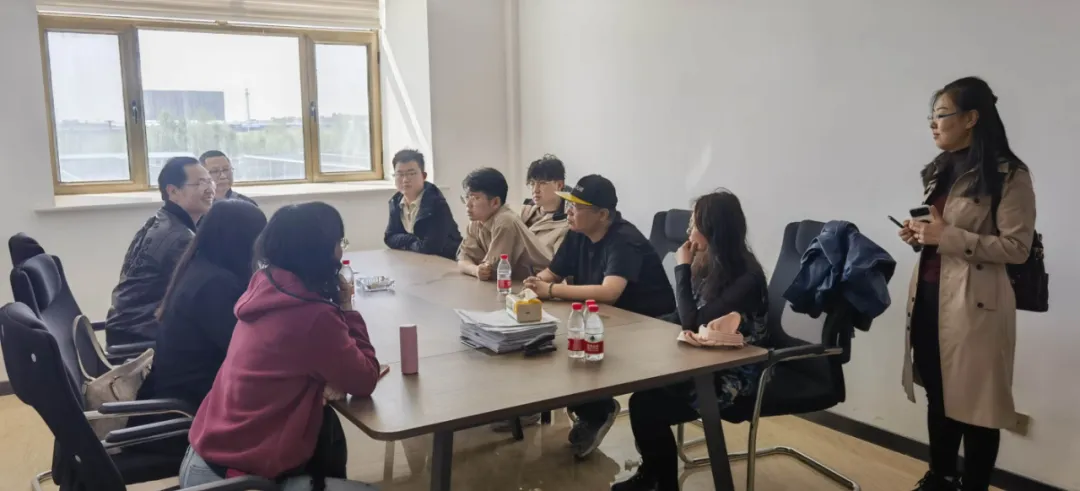
Our second stop was Inner Mongolia Normal University Erenhot International Institute, a secondary college jointly run by Inner Mongolia Normal University and Erenhot City. Students generally adopt a 2+2 model, with courses mainly taught in Mongolian. In the latter two years, they study at the Mongolian University of Life Sciences. The main goal is to cultivate future talents for Sino-Mongolian economic construction. In the morning, Professor Zhou gave them a lecture on "The Logic of E-commerce and Erenhot's Opportunities". We hope that everyone can bring hope to the future by leveraging the advantages of the border and the spring breeze of the Belt and Road.
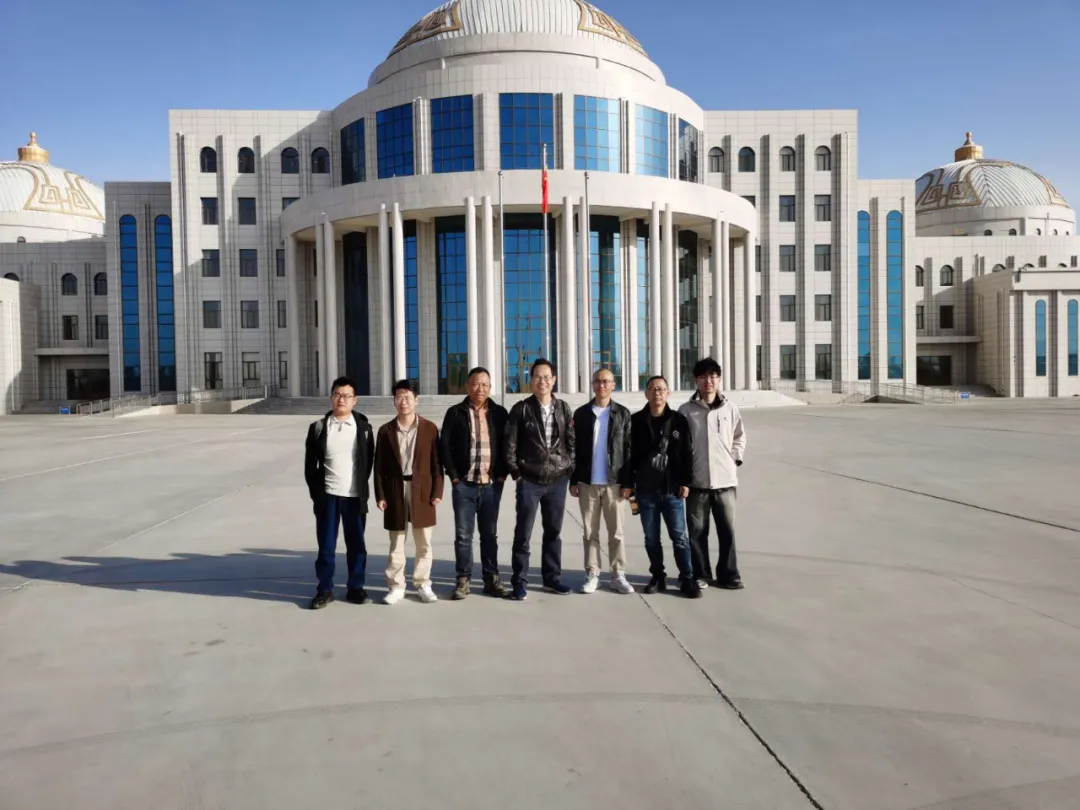


In the afternoon, we went to the Erenhot China Customs Port Management Center. The customs staff gave us a detailed introduction to the functions of the customs port management center, the import and export of goods, the throughput of railways and highways, and the annual import and export volume of vehicles and personnel.

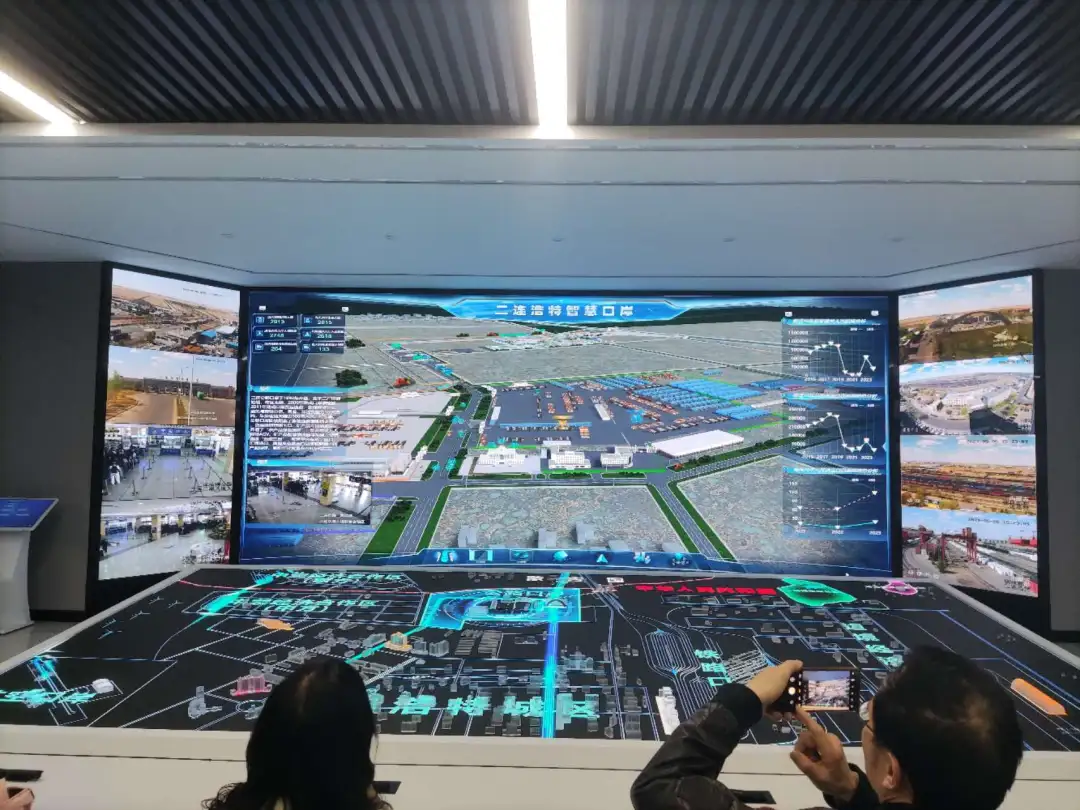
On the 6th of May, we went to the Cross-border E-commerce Huanyu Logistics Park. The person in charge, Mr. Li, gave us a detailed explanation of the construction structure of the logistics park, the inspection process of Mongolian and Chinese vehicles, and introduced border trade and the corresponding policies and regulations. This allowed us to understand the scale of border trade and some preferential policies for the development of border people and the long-term consideration of the government for the retention of talents in the border areas.
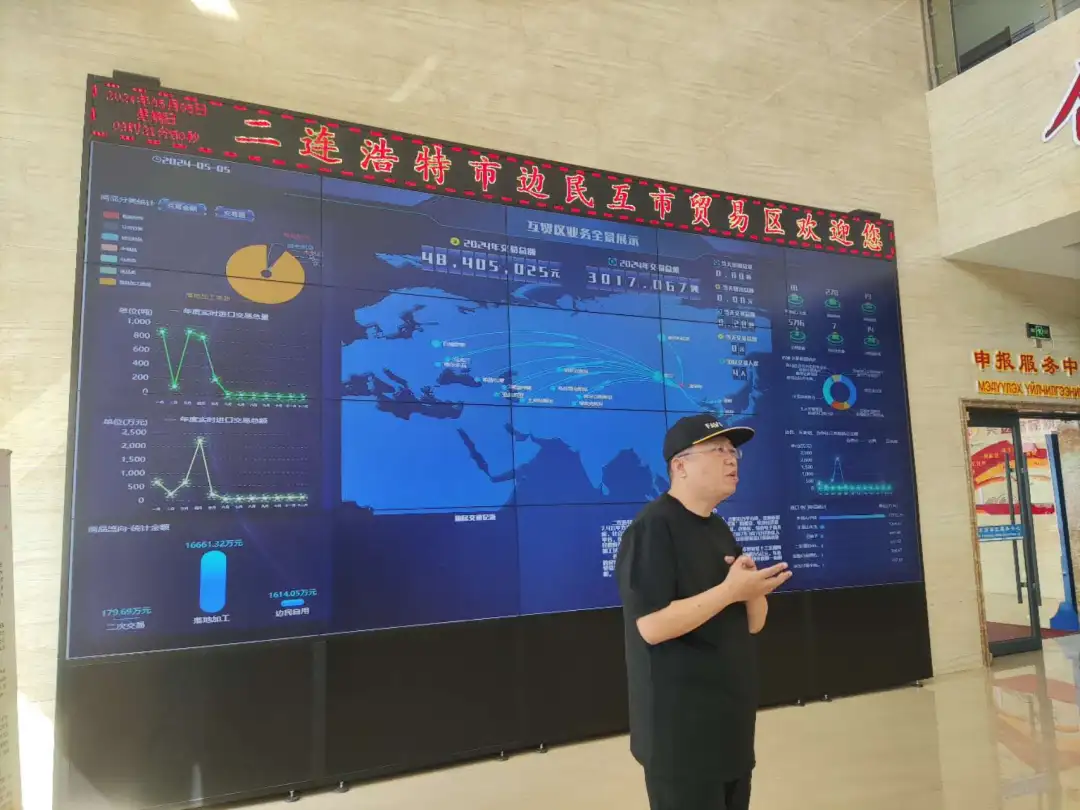

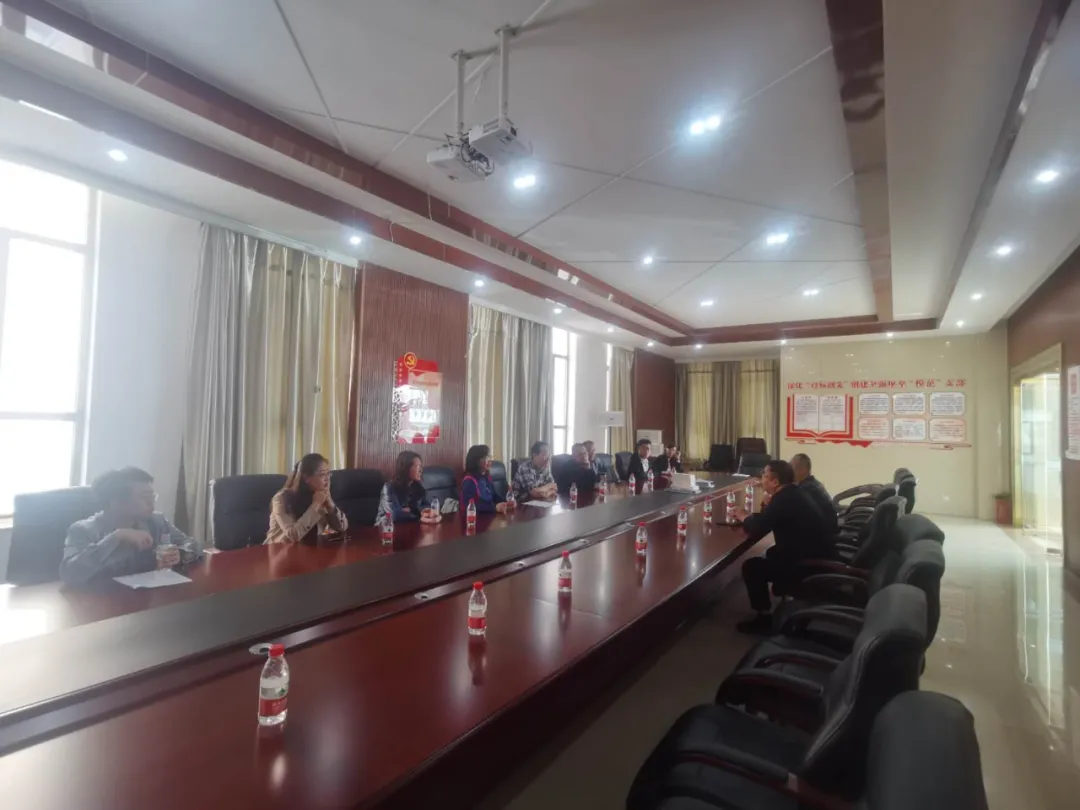
On the 7th, we packed our luggage and said goodbye to Erenhot. After passing through Chinese and Mongolian customs, we arrived at the first city in Mongolia—Zamyn-Üüd. This is a city with a population of less than 30,000. Rather than a city, it is more like a desolate small town. However, for a country with a total population of just over 3 million, this is indeed a considerable city. At the suggestion of the professors, we visited some local stores and asked about prices. After seven or eight people rushed into their stores and inquired about prices several times, we ended up not buying anything. I don't know what the store owners felt.


The Erenhot trip ends here, and the journey to Ulaanbaatar is about to begin. In general, as a border city, Erenhot is like a beautiful rainbow bridge. We stepped out with curiosity, hoping to experience different customs, or we stepped on the bridge with a feeling of missing home, eager to return to our country. It always stands there, showing the communication and interaction between the border people of the two countries, the blending of friendship and culture, and also revealing the differences between the two countries, the conflicts between the border people, the cunning of the businessmen, and the discrimination among the people. And we, like passing travelers, have ended our story about it and are walking towards the other side of the rainbow bridge, Ulaanbaatar. We cannot be Zhang Qian, but following in the footsteps of Xu Xiake is enough to comfort us for a lifetime.